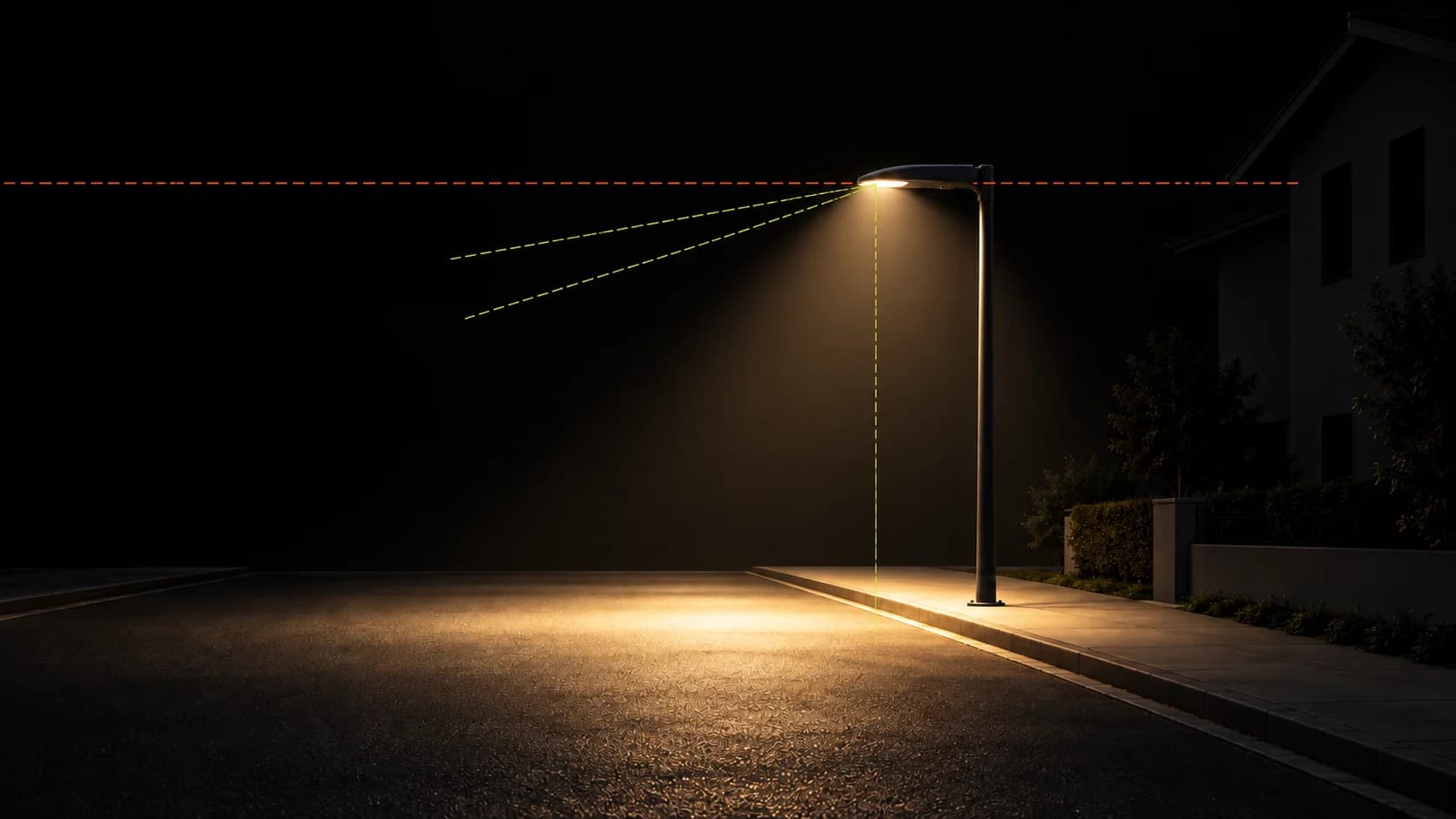
Optimize cities, not fixtures: Taman at IALD Enlighten Europe
In his featured session in Paris, Dean Skira argued that the industry has spent three decades optimizing luminaires while the glow above our cities kept growing. The bigger opportunity is street lighting, and a process that starts with the street, not the product.

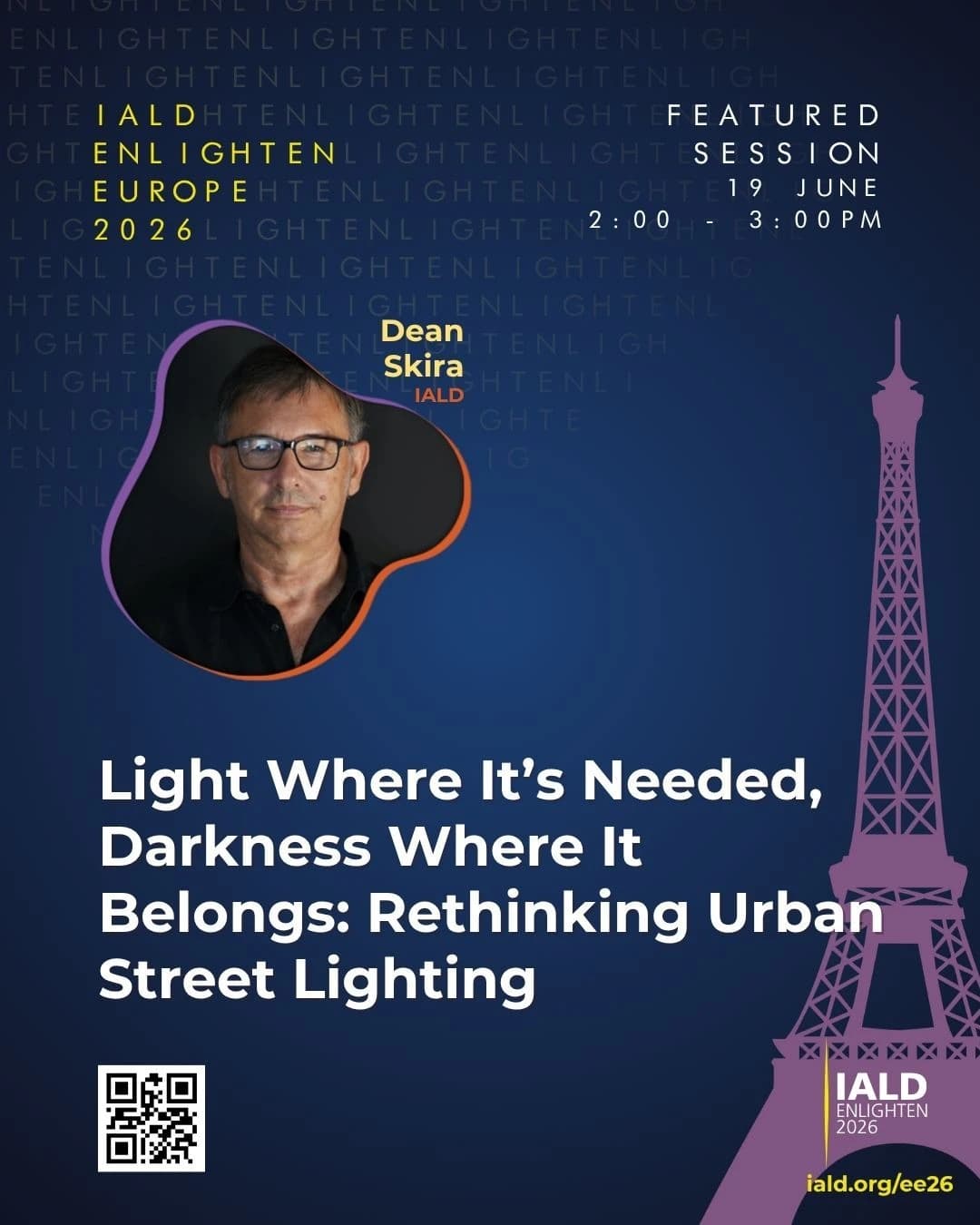 Paris · IALD Enlighten Europe 2026
In diesem Artikel
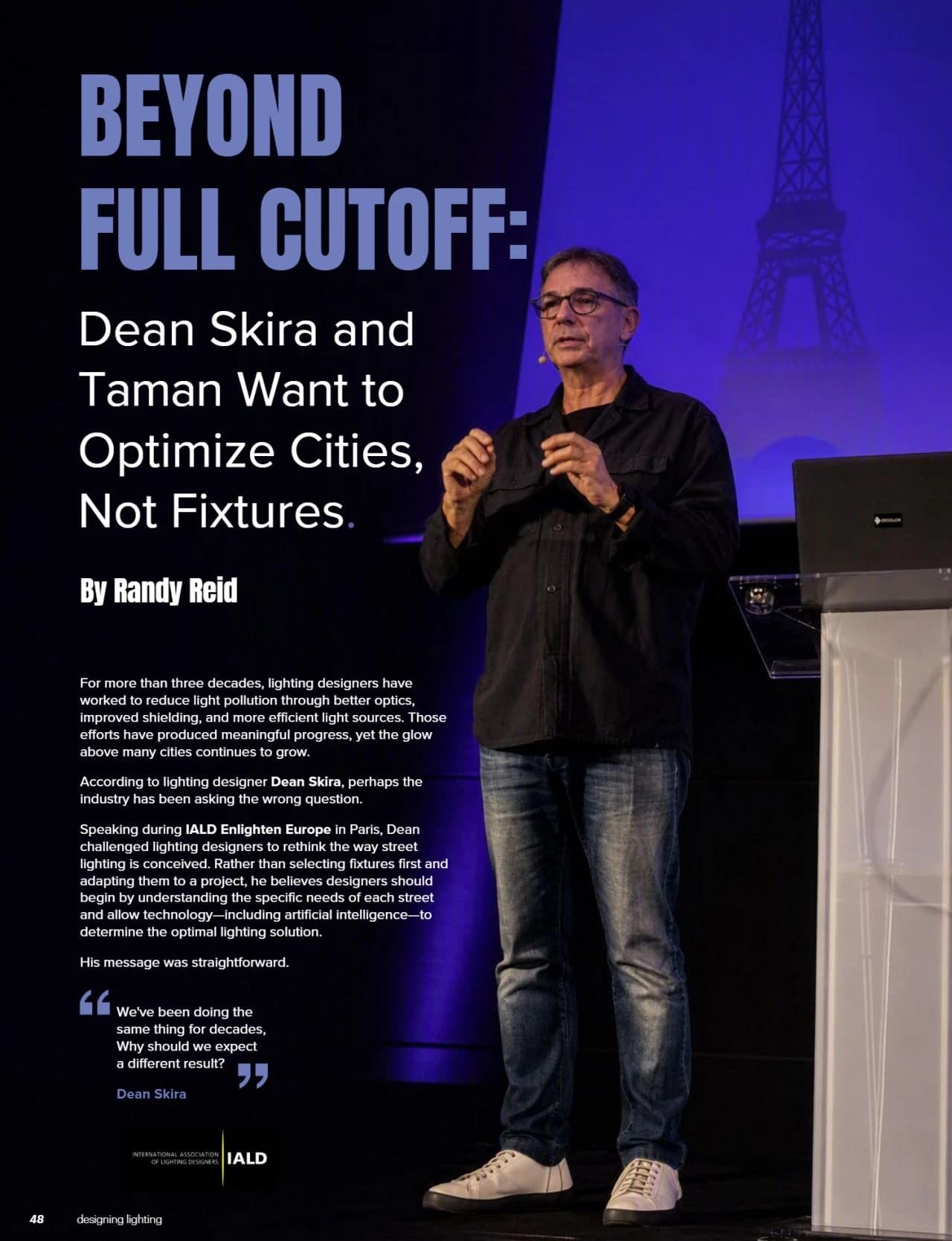
For more than three decades, lighting designers have fought light pollution with better optics, better shielding and more efficient sources. The progress is real, yet the glow above most cities keeps growing. On 19 June 2026, in a featured session at IALD Enlighten Europe in Paris, Dean Skira argued that the industry has been asking the wrong question. It keeps asking which luminaire to buy. The question that decides light pollution is how much light a street actually needs, and where. Answer that first, and the luminaire follows.
“We've been doing the same thing for decades. Why should we expect a different result?”
The wrong conversation
Most of the public debate about light pollution is about architectural lighting: monuments, facades and landmarks. They are visible, so they get the attention. But they are a small fraction of a city's light at night. Pula, Dean's hometown, has roughly twenty significant historic structures. It also has about 220 kilometres of roads and nearly 8,000 streetlights.
Street lighting is easy to overlook precisely because it is everywhere. It shapes public safety, pedestrian comfort, traffic, energy bills, maintenance budgets, wildlife and the character of a city after dark, and it touches nearly every resident every single night. That scale is exactly why it deserves far more of the profession's creative energy.
A personal journey
Dean first ran into the question in the early 1990s, wondering whether his own profession was quietly contributing to environmental damage. Soon after, designing a waterfront promenade in Pula, he specified full-cutoff optics, one of the earliest installations of its kind in Europe. The principle has not changed since: control the light where it is needed and keep it from spilling anywhere else.
Designing within impossible constraints
One recent project shows what that principle demands in practice. Skira's studio was asked to redesign the lighting of Pula's Roman Arena: white light for everyday viewing, dynamic colour for concerts, theatrical lighting for performances and emergency lighting, all on one of Croatia's most important monuments. The constraints: only six existing poles, nothing attached to the ancient stone, no new foundations, and a Croatian regulation that forbids architectural light from reaching nearby residential windows.
Floodlighting was never an option. The answer was carefully engineered projection optics and custom gobos that shape the light to the stone itself, verified in full-scale mock-ups. The Arena is lit, and almost nothing reaches the surrounding buildings. Preservation, the client's brief and environmental responsibility turned out to be compatible after all.
Stop optimizing fixtures
The Arena solved an architectural problem, but it reinforced a larger point. The industry keeps optimizing luminaires instead of optimizing cities. The workflow has barely changed in decades: pick a fixture from a catalogue, drop it into calculation software, check the standard, done. The fixture drives the process.
Taman reverses that sequence. It starts with a digital model of the street. AI-assisted optimization evaluates the roadway geometry, sidewalks, building setbacks, traffic and pedestrian patterns and the applicable lighting standard, and only then calculates the ideal photometric distribution. Selecting, or manufacturing, the luminaire is the last step, not the first. Every street deserves its own optimized lighting solution instead of sharing a handful of standard distributions.
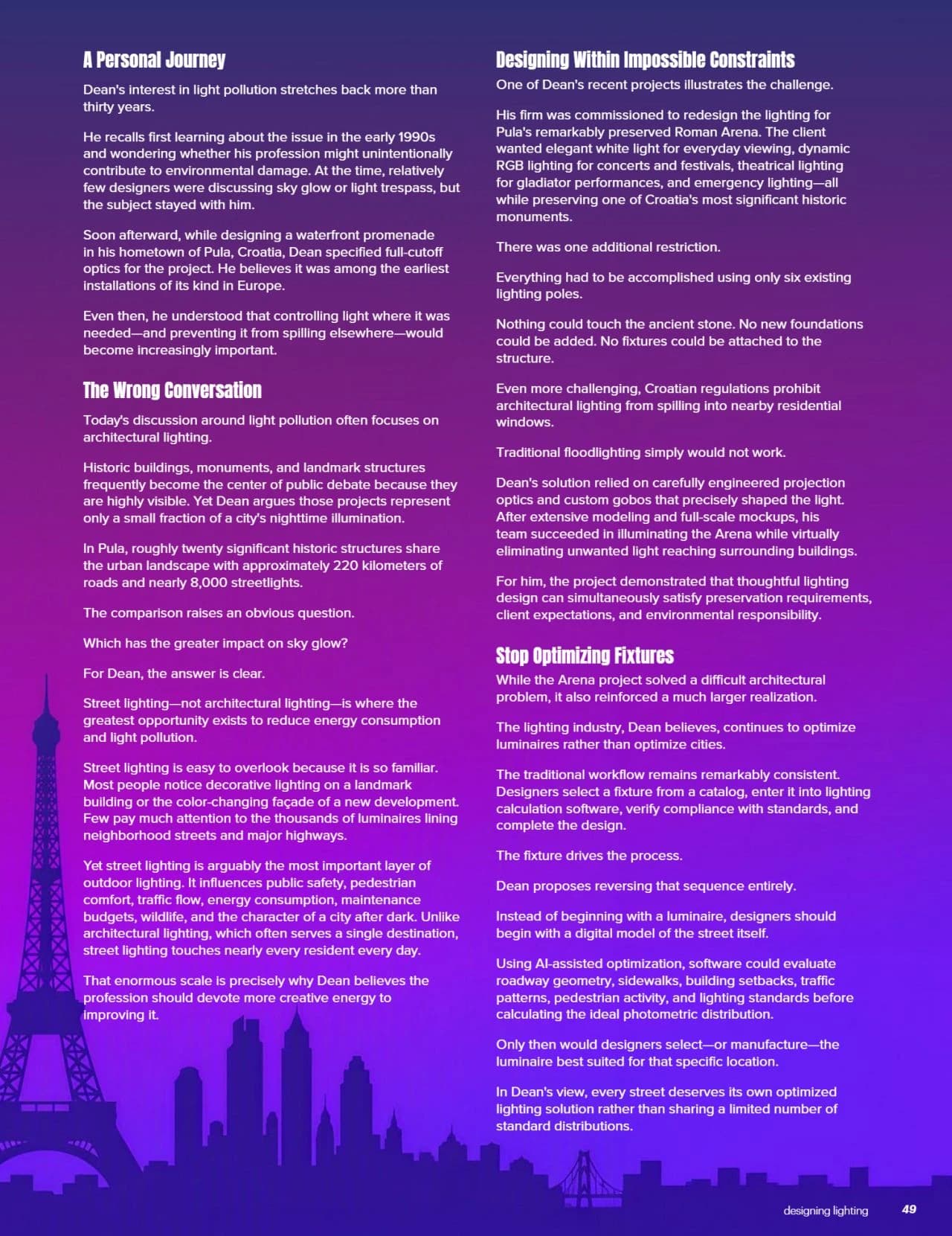
Thank you to the IALD community and to everyone who attended the session and continued the conversation afterwards. Randy Reid, editor of designing lighting, later captured the talk in the feature "Beyond Full Cutoff: Dean Skira and Taman Want to Optimize Cities, Not Fixtures".
“Light where it is needed. Darkness where it belongs.”
"Beyond Full Cutoff" by Randy Reid, pages 48-49.
Urban planners, municipalities, lighting designers, engineers and manufacturers: apply for early access and try a different approach on your own project.

Lighting designer with more than 35 years in architectural and urban lighting and over 50 international awards. Founder of Taman.